


Cary Park’s 40 resale closings in the year ending 12 September 2026 had a median sale price of $853,500 at $272 per square foot — well above Cary’s town-wide resale median of $611,000 — but took a median 18 days to sell, slower than the town’s 13-day median. Fourteen of the 40 sold within a week; the rest took longer, which is what pulls the median above the town figure.
What is Cary Park, and when was it built?
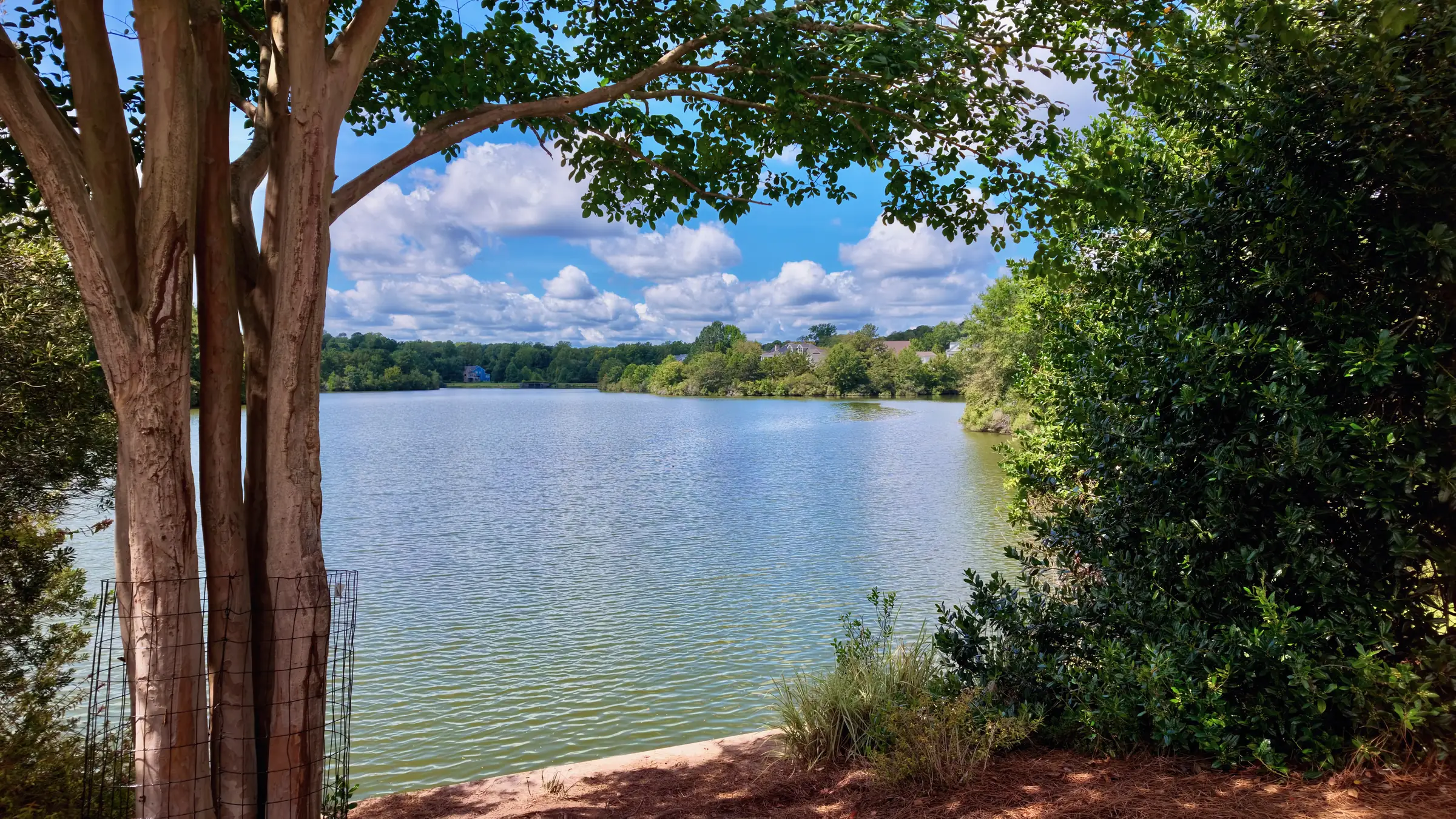
Cary Park is a residential subdivision in Cary large enough to generate a meaningful annual resale count on its own — 40 closed sales in a single 12-month window, among the higher counts for a single Cary subdivision. A Doorify MLS member search of Cary Park’s closed residential sales from 12 September 2025 through 12 September 2026 shows the homes that actually changed hands in that window were built between 1999 and 2014. That describes the sold sample from this specific 12 months, not the community’s full build-out range — a section built before 1999 or after 2014 that didn’t happen to trade in this window wouldn’t show up in these figures, and the neighborhood’s actual construction span is a matter for county parcel records rather than a sales sample.
How does Cary Park’s sales volume compare within Cary?
Forty closed resales in 12 months is a substantial volume for a single Cary subdivision — enough that Cary Park’s median price and time-on-market figures rest on a broader base than many of the smaller, older club communities in town, where an annual sample can run under 20 sales. A larger sample doesn’t make Cary Park’s numbers more predictive of any individual listing’s outcome, but it does mean the median here is less likely to be an artifact of one or two unusual transactions than it would be in a 15- or 20-sale subdivision.
What does resale look like in Cary Park?
The figures below come from a Doorify MLS member search of closed residential sales in the Cary Park subdivision, 12 September 2025 through 12 September 2026 — 40 closed sales, compared against Cary’s town-wide resale median over the same period.
| Metric | Cary Park, 12 months ending 9/12/2026 | Cary town-wide resale median |
|---|---|---|
| Closed sales | 40 | — |
| Median sale price | $853,500 | $611,000 |
| Median price per square foot | $272 | $276 |
| Median days on market | 18 | 13 |
| Share sold within 7 days | 14 of 40 (35%) | — |
| Year built, homes sold in this window | 1999–2014 | — |
Based on information from the Doorify MLS, Inc. for the period 12 September 2025 through 12 September 2026.
Days-on-market figures need a caveat: Doorify MLS changed how days on market accrue in July 2026, so time spent in Coming Soon status no longer counts toward the total. This 12-month window straddles that change, meaning sales earlier in the period and sales later in the period were not timed on exactly the same basis — the 18-day median for Cary Park mixes both methods rather than one consistent one, as does the town-wide 13-day figure it’s being compared against.
Why does Cary Park sell above the town median price but slower than the town median time?
Cary Park’s $853,500 median sale price sits well above Cary’s $611,000 town-wide resale median, while its 18-day median time on market runs longer than the town’s 13-day figure. Those two facts sitting together is not a contradiction — a higher price point can draw a smaller, more selective buyer pool that takes longer to close on any individual listing, even in a subdivision that ultimately clears 40 homes a year. The data here shows that pattern; it doesn’t isolate why any single Cary Park listing sold in 18 days rather than 8, since the MLS aggregate figures don’t capture pricing strategy, staging, or condition at the individual-listing level.
What separates the homes that sold within a week from the rest?
Fourteen of Cary Park’s 40 closed sales — 35% — sold within seven days, which is faster than the town’s own 13-day median would suggest for the neighborhood as a whole. The other 26 sales took longer, in some cases considerably longer, and that split is what pushes the subdivision’s overall median to 18 days despite more than a third of its sales moving quickly. The MLS closed-sale data used here doesn’t record why a given listing sold in 4 days versus 40 — pricing at listing, condition, lot location within the subdivision, and showing-schedule decisions all plausibly play a role, but none of those are fields this data can isolate. Reading the 35% figure as “over a third sell fast” is fair; reading it as a prediction for any specific listing is not.
What does the housing stock in Cary Park look like?
The sold sample’s 1999–2014 build years point to a subdivision developed in phases over roughly a decade and a half, which is consistent with a large, master-planned Cary community built out in sections rather than in a single release. That kind of phased build-out typically means lot size, house style, and proximity to whatever common amenities the community offers can vary meaningfully between sections built years apart — a pattern worth keeping in mind when comparing two Cary Park listings, since “same subdivision” doesn’t necessarily mean “same era of construction” inside a 15-year build-out. Precise counts of home types, lot sizes, or amenities are not part of this sales data and are better confirmed against Wake County parcel records or the community’s own association materials.
Where is Cary Park located, and how do you get around from it?
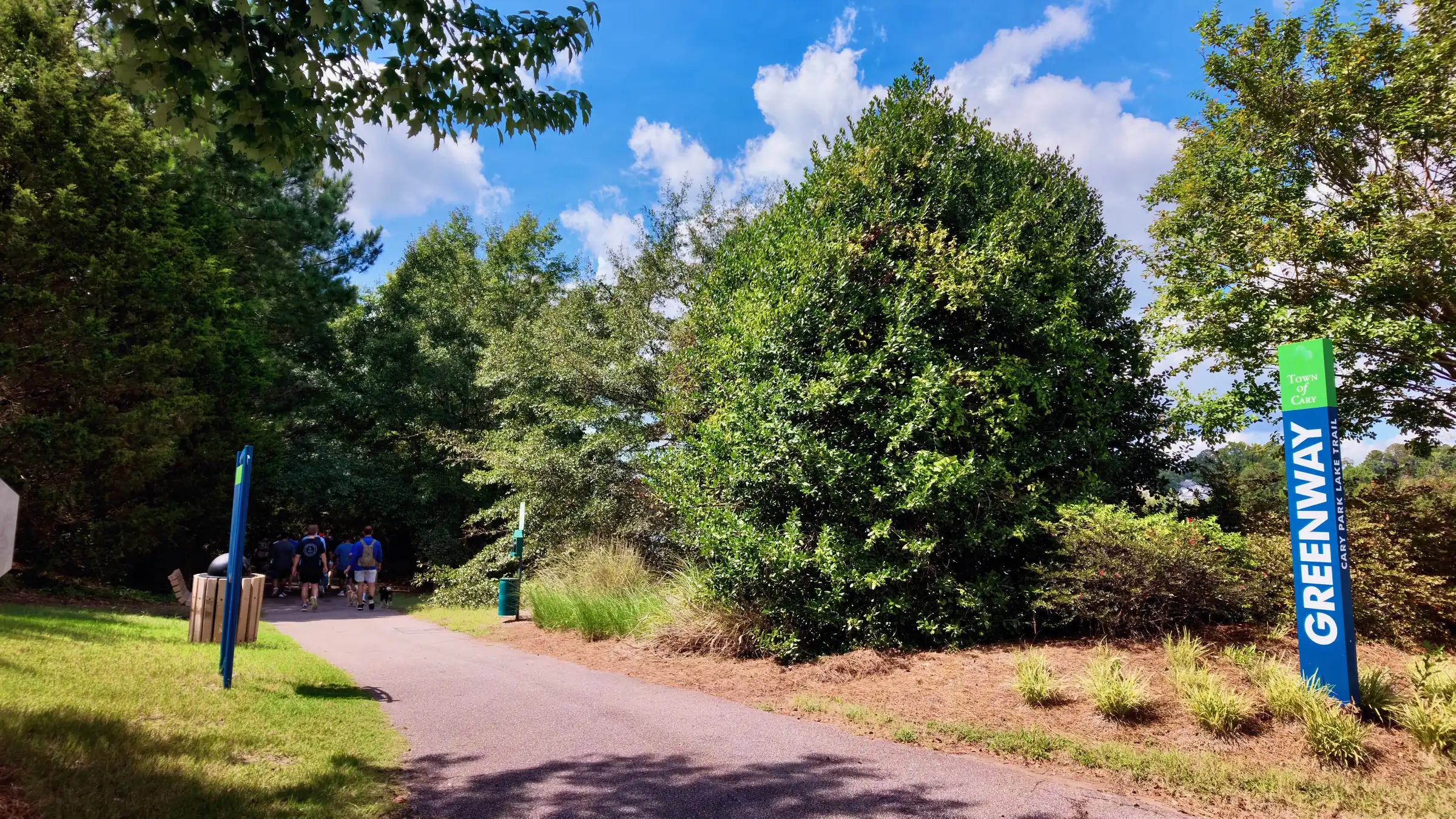
Cary Park is a residential subdivision within Cary town limits. No transportation authority publishes a drive-time figure specific to Cary Park, and a resident’s realistic commute to downtown Cary, Raleigh, or RTP depends on the specific entrance used and the time of day, so it shouldn’t be generalized from the neighborhood’s name or general location alone. Anyone weighing a specific commute should check it directly rather than relying on a subdivision-level description.
How does Cary Park compare to Carolina Preserve?
Cary Park and Carolina Preserve are both large, phased Cary subdivisions that generate substantial annual resale volume rather than the 15-to-20-sale samples typical of smaller, older club communities in town. Carolina Preserve is an age-restricted community with its own distinct amenity and buyer profile, which makes it a different market than Cary Park’s general-population resale pool rather than a direct price comparison — the two are worth understanding as different models of a large planned community rather than substitutes for each other.
Who does Cary Park not suit?
Cary Park is not a fit for a buyer whose budget is anchored to Cary’s $611,000 town-wide median — the subdivision’s own $853,500 median sits well above that, and a buyer targeting that lower price band will likely find better matches in other Cary subdivisions. It’s also not the fit for a buyer or seller who needs certainty about a fast sale: while 35% of this year’s sales closed within a week, the median 18-day figure means a meaningful share of listings took substantially longer, and there’s no way to know in advance which side of that split a given listing will land on. Anyone comparing financing across price points should talk to a lender about how a higher purchase price changes debt-to-income calculations, and talk to a closing attorney about how the subdivision’s covenants appear in title work. See the Cary neighborhoods overview for how Cary Park compares to the town’s other subdivisions, and our look at Cary’s fastest-selling neighborhoods for how its 18-day median stacks up against faster-moving communities.
Other Cary neighborhood studies
- Lochmere, Cary NC: The Neighborhood and the Golf Club, Explained
- MacGregor Downs, Cary NC: The Country Club Community, Explained
- Carpenter Village, Cary NC: What the Resale Data Shows
- Oxxford Hunt, Cary NC: A Value-and-Speed Read on the Resale Data
- Scottish Hills, Cary NC: What the Resale Numbers Show
- Kildaire Farms, Cary NC: What the Resale Numbers Show
- Highcroft, Cary NC: Why It Sells Faster Than Anywhere Else in Town
- Cary, NC Price Per Square Foot by Subdivision
About the author
Cameron Smith writes Move Up NC’s real estate guidance for Cary, Morrisville and the North Carolina Triangle.
Editorial note: This article reports closed-sale data for one neighborhood and does not rank neighborhoods or schools, or provide legal, financial or Fair Housing advice.